Floating frames vs float mounting: what's the difference?
Both 'float' your art, but they're not the same thing. One is a frame for canvas; the other is a way of mounting paper. Here's when to use each.
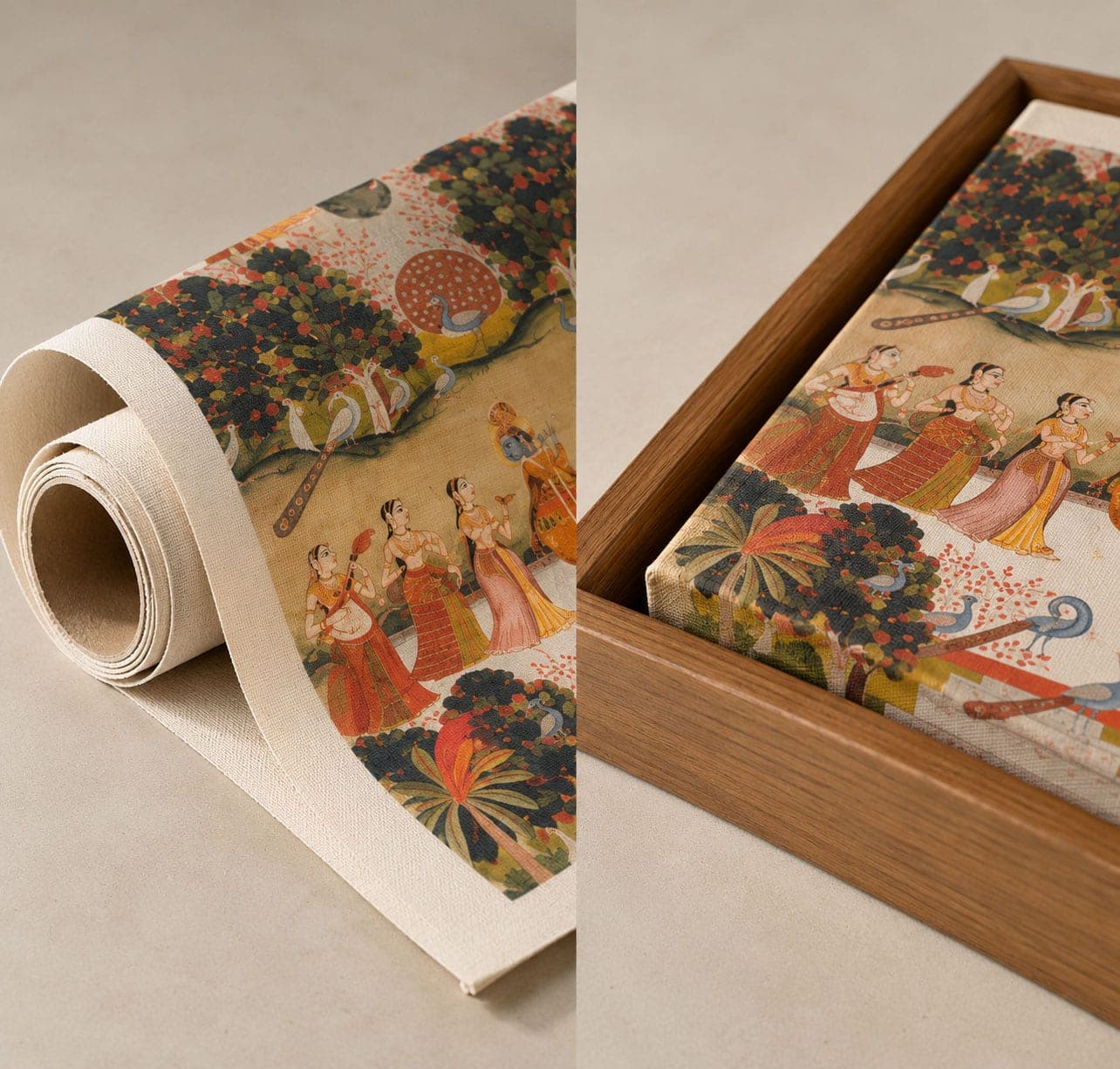
"Floating" is one of the most-searched words in framing — and one of the most confusing, because it describes two different things.
What is a floating frame?
A floating frame (or floater frame) is made for stretched canvas. The canvas is fixed inside from the back, with a narrow gap between it and the frame. From the front, the painting seems to hover, and its edges stay fully visible. There's no glass and no mat.
What is float mounting?
Float mounting is for flat work on paper or fabric. Instead of a mat window covering the edges, the artwork is mounted on top of the mat board, with space all round. Every edge stays visible. It then goes into a regular frame, behind acrylic. In our configurator this is the floating mat option.
| Floating frame | Float mounting | |
|---|---|---|
| For | Stretched canvas | Paper, photos, textiles |
| Glass / acrylic | No | Yes |
| Mat | No | Yes — the art sits on top of it |
| Edges visible | Yes | Yes |
When should I float mount?
- Handmade or deckled paper where the rough edge is part of the charm
- Work signed right at the edge
- Textiles, embroidery and fabric pieces
- Small pieces that need to feel more substantial
Which one do I need?
If it's a canvas on wooden bars, choose a floating frame — start with canvas framing. If it's on paper or fabric and you want the edges visible, choose a floating mat when you frame artwork or textiles. Our mat guide explains the other mat options.
Something at home deserves a better wall.
Keep reading
All stories