Canvas framing: how to frame stretched and rolled canvas
Stretched canvas, rolled canvas and canvas prints each need a different approach. Here's how to frame each one so it looks its best.
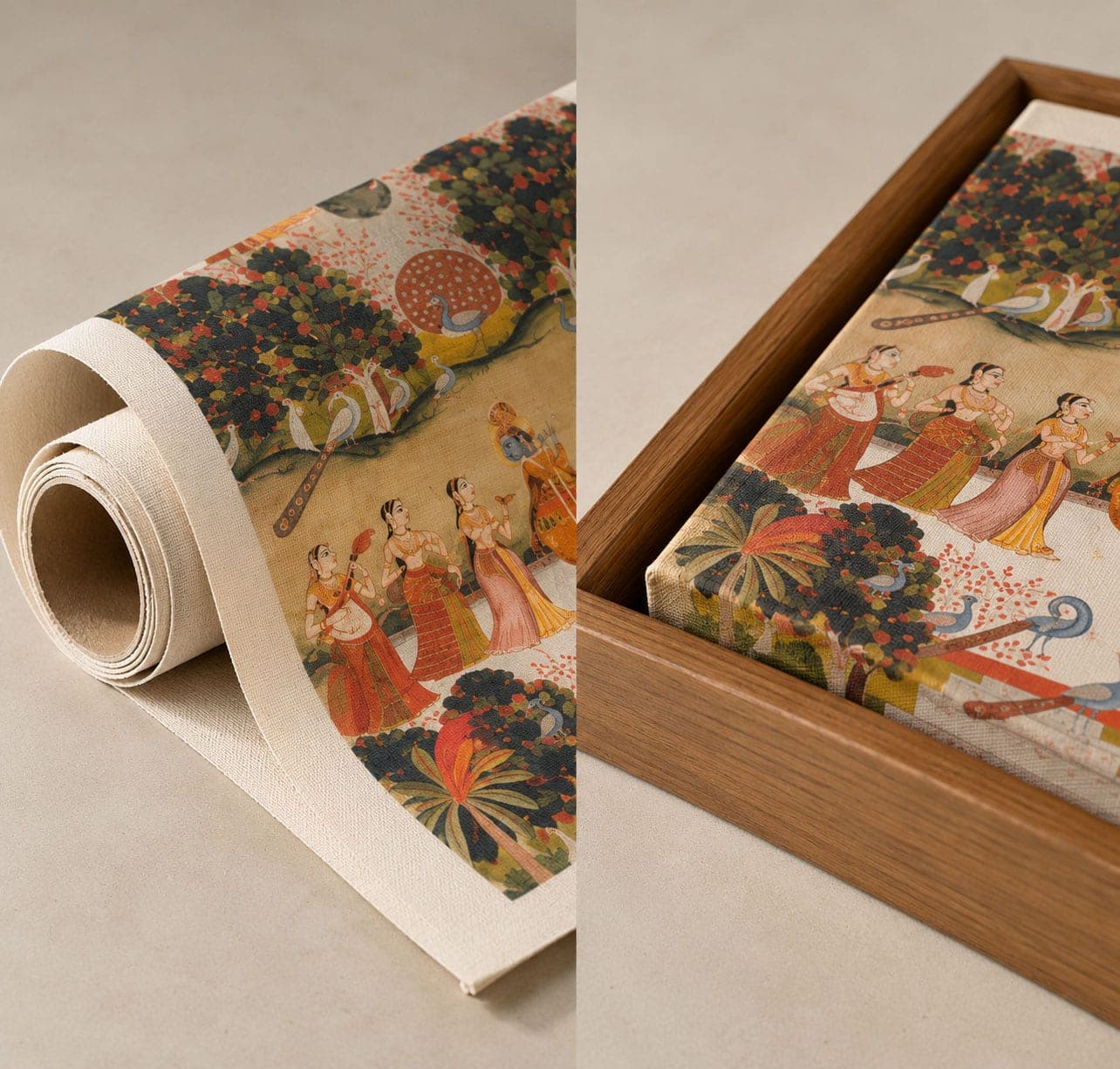
Canvas is tougher than paper, but it still needs the right frame. The first question is simple: is your canvas already stretched over a wooden frame, or is it rolled?
Stretched canvas: use a floating frame
A stretched canvas is already mounted on wooden bars. The best way to frame it is a floating frame: the canvas sits inside with a small gap all round, so it looks like it's floating and none of the painted edge is covered.
Our floating frames for stretched canvas come in Museum Gold, Classic Black, Halo Silver and Classic White. Read more about how floating frames work.
Rolled (unstretched) canvas: two options
- Stretch and gallery wrap: we stretch the canvas onto a wooden frame for a clean, frameless look — and you can add a floating frame after.
- Frame it flat: framed like a regular artwork, behind acrylic. Good for thin canvas or pieces with narrow borders.
Stretching needs extra canvas around the painted area to wrap round the bars. If your painting goes right to the edge, framing it flat is usually safer.
Does canvas need glass?
Usually not. Oil and acrylic paintings on canvas are normally left uncovered so the texture shows and the paint can breathe. Thin or delicate canvas framed flat does go behind acrylic for protection.
How to measure a canvas
- Stretched: measure the outside of the canvas, width then height, and note the depth of the bars.
- Rolled: measure the painted area, and the unpainted border around it.
In Bengaluru we re-measure when we collect, so a close estimate is fine. Start with canvas framing.
Something at home deserves a better wall.
Keep reading
All stories